FAQ

Frequently Asked Questions

How do you pronounce your name?

My name is pronounced “ro-SEH-fuh-nee”. If one thinks of the name “Stephanie”, adds “ro” and removes the t, one should pronounce Rosephanye correctly.

What is the origin of your name?

I have heard two stories. The first is that my grandmother (or one of my female relatives) wanted to name me “Fannie” (“Fannny” is an alternate spelling). My mother, a school teacher, was not pleased with that idea but compromised and combined her name “Rosa” with “Fannie”. Another story that I heard was that it was suggested to name me “Stephanie”. My mother wanted me to have part of her name, so she combined “Rosa” with “Stephanie,” removed the t and changed the i to y (because she thought it complimented the look of the name while functioning like the i to make the e long. As well, it distinguished further my name from “Stephanie”).

What was your first published composition?

My first compositions were published at the same time: The Word Was God, an original sacred motet, and I Wanna Be Ready, an accompanied spiritual arrangement (both SATB). While a doctoral student at Florida State University, I arranged the spiritual “I Wanna Be Ready” for the FSU Gospel Choir. At the concert performance Professor Rodney Eichenberger expressed interest in having the song published. He was kind enough to submit it to a publisher with whom he was associated. Unfortunately, it sat in that publisher’s files for a couple of years. When I began teaching at Philander Smith College, I composed “The Word Was God” for the school’s concert choir and was encouraged by several choral directors to submit it to a publisher. This time, I submitted both works to not one, but ten publishers—all accepted both works for publication. Needless to say, I learned from that experience that it is not a good idea to submit a song to more than one publisher at a time.

What is your goal as a composer/arranger?

My goal as a composer is to compose or arrange music that touches the heart and souls of the listeners and singers.

Why did you decide to become a music educator?

I became a music educator because I feel that I was created for such a purpose. Both my parents were educators so I got it naturally. Finally, I find meaning impacting the lives of others for good.

What are your first memories of singing?

I found my love for singing in high school when I started singing with three of my girlfriends. We annoyed many of the other kids in school because we sang in the school choir, restroom, gym, cafeteria and anywhere we found ourselves together. After a while, we formed a female gospel quartet.

Who and what are your biggest influences as a composer?

My first major influences were gospel, jazz, and R&B, since these are the styles of music that I listened to most as a kid. Next would be classical music, especially the music of Handel, Bach (counterpoint), Verdi and Puccini (romanticism and lyricism). William Grant Still, the dean of African-American composers, has influenced my style of composition. Most of the pioneers of classical spiritual arrangements have influenced me, including Undine Smith Moore, Hall Johnson, J. Rosamond Johnson, and others.

Which are your most popular works?

Since its release, The Word Was God has been my most popular. Others include I Dream A World (SATB), Non Nobis, Domine, (SATB), SORIDA (SATB), Sicut Cervus (SSAA), Still I Rise (SSAA), Ascribe to the Lord (SATB), Pete, Pete (children’s voices), E Oru O (SATB), I Wanna Be Ready (SATB), Sometimes I Feel Like A Motherless Child (SATB).

Can you name a special moment when your compositions have been performed?

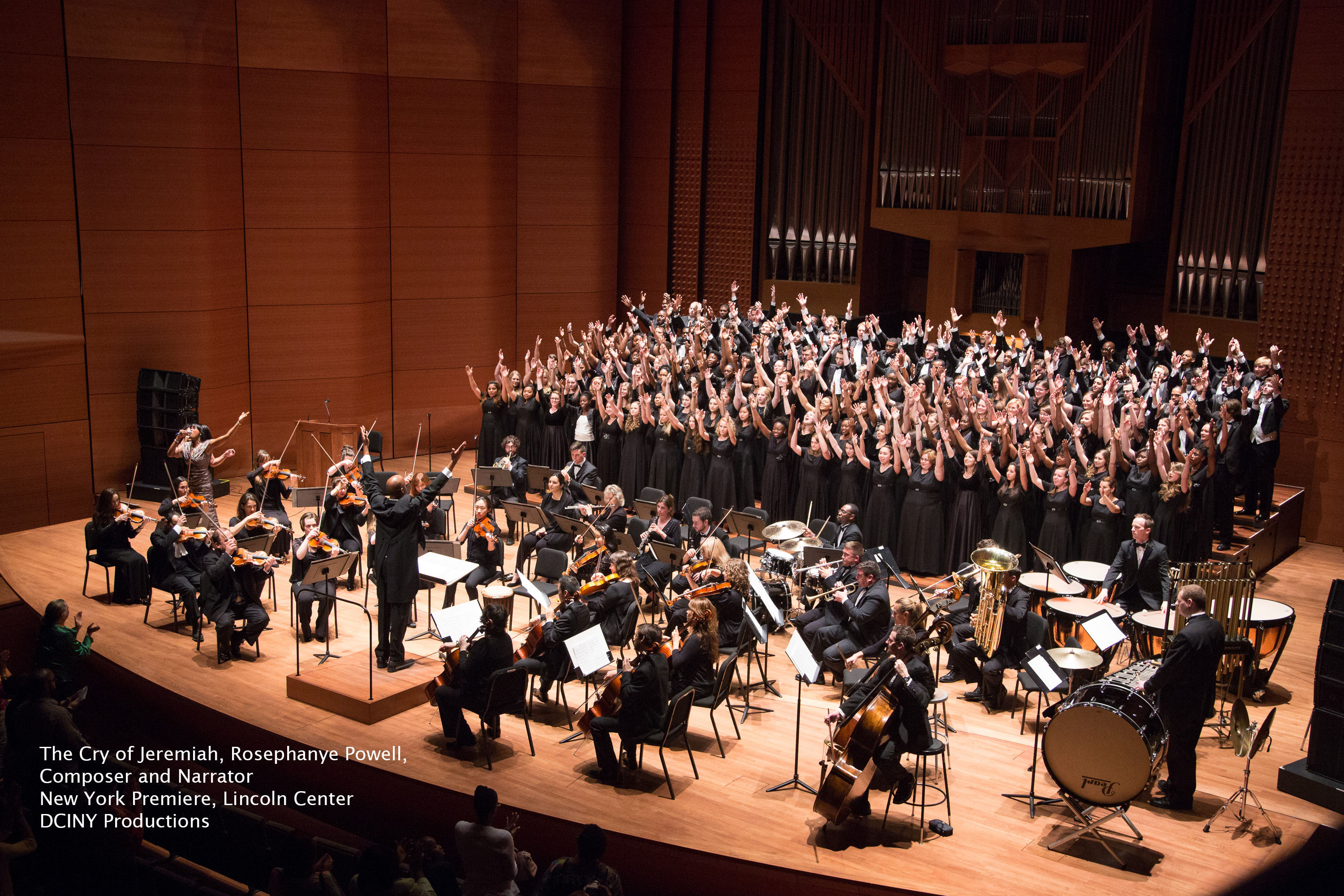
Yes.  And they are too numerous.  But on that comes to mind is “Sing for the Cure”.  I was asked to write one of the movements for this multimovement work that celebrates and honors the journeys of those who lost their battle with cancer, fought the battle and were victorious, as well as those loved ones who have traveled the journey with them.  To be a part of the evening of the performance with poet-laureate Dr. Maya Angelou as narrator, the Turtle Creek Choral, The Women’s Chorus of Dallas, and the Metropolitan Symphony Orchestra was nothing short of exhilarating.  But to hear from Tim (Dr. Timothy Seelig, director of the TCC) that at the rehearsal, Dr. Angelou, after hearing my song “The Promise Lives On” (lyrics by wonderful lyricist, Pamela Martin) performed by the chorus and orchestra, was so overcome with emotion and tears, had to gather herself before continuing on.  As one of my favorite contemporary poets, it was most gratifying and humbling. “Sing for the Cure” has allowed me to play a small part in telling the life stories of so many cancer survivors and fighters.  I am so grateful to have had such an opportunity.

There are so many more special moments, most of which are about the singers who sing my music.  They bring it to life and make moments special even when the performances are not the strongest.

What contributed to you being a successful composer?

That is difficult to answer.  I think that the singers and music directors could answer it more effectively.  But, as a singer, my main endeavor is to write music that touches the heart and sings well in the voices.   I believe that God has given me a talent for writing music (especially since I was not a strong student in music theory and don’t always think theoretically when composing).  Compositionally, I flow from a lyrical vocal line, rhythmic energy and colorful harmonies that support and paint the lyrics.  For me, everything flows from a desire to express the meaning of a text.

What was the impetus for your CD Motherless Child?

I travel the country working with young and older singers who don’t always get the connection between the African-American spiritual and their lives.  Because the songs are a part of academic musical studies, many don’t appreciate the depth of heart, soul and life that is in these songs.  When working with singers, it has always been my objective to bring out the meaning of these songs which allows the singers to perform the songs with more meaning and emotion.  Motherless Child allowed me to take the spiritual out of academia and express these beautiful songs in a more contemporary fashion.  I have heard numerous reports from parents, college students, and high school students about how the CD has assisted them in making a connection.  As a singer and lover of the poetic voice, Motherless Child gave me an opportunity to share how I relate to and have come to identify with the spiritual.  Finally, it allows me to pass the legacy to my two daughters. As a root of ALL African-American music, the spiritual must be preserved.